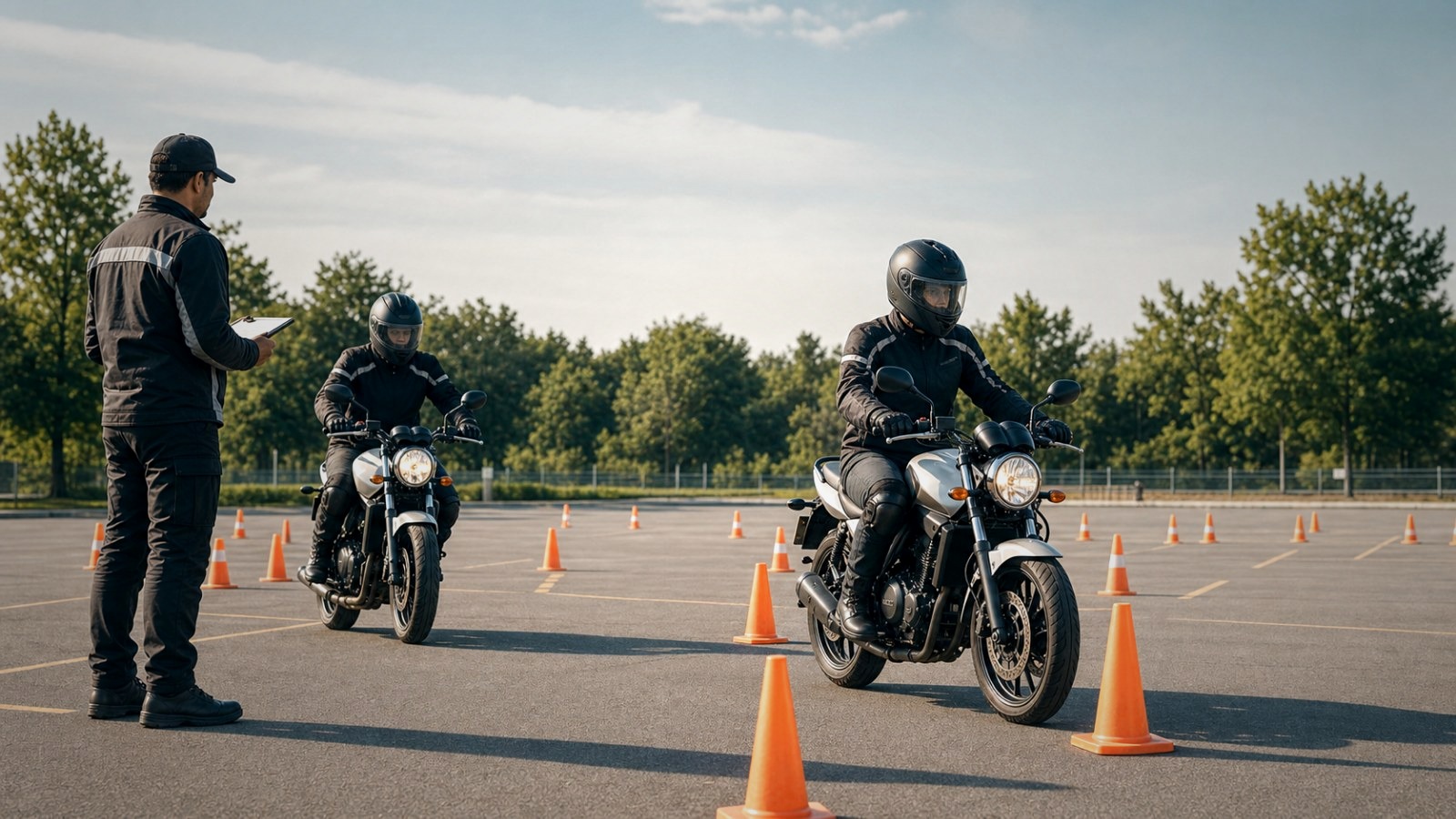
The Fear Every Beginner Feels
Here is something we tell every person who walks onto STAR Track for the first time: you are not the only one who is nervous. We have watched over 200 people stand next to a motorcycle with the exact same look -- a mix of excitement and genuine fear. Hands slightly shaking. Wondering if they are cut out for this.
We train riders from age 16 to 75 and beyond. Corporate professionals, college students, homemakers, and expats from ten countries have all felt that flutter of nerves before discovering that riding can be learned step by step.
That fear is not a weakness. It is your brain telling you to pay attention -- and paying attention is exactly what makes a good rider.
Before Your First Lesson
What to wear. Long pants, a regular top, and closed-toe shoes that cover your ankles. Leave sandals and loose scarves at home. You do not need to buy motorcycle gear -- we provide a fitted helmet, riding gloves, and a protective jacket.
Mental prep. Let go of the idea that you should already know how to do this. There is no pace to keep up with. Coaching is paced to your comfort and ability, so you are not rushed through skills before you are ready.
Physical requirements. You should be able to sit comfortably, hold the handlebar, and operate the levers. Our training motorcycles are chosen for progressive learning, and the team helps you find a setup that suits your height, reach, and comfort.
What Happens on Day One
Your first session follows a deliberate sequence. We do not put you on a moving motorcycle in the first ten minutes.
Safety briefing. Your instructor walks you through the track, the bike, and the controls -- all while the engine is off. You will learn where the brakes are, what the clutch does, and how the throttle responds.
Getting comfortable. You sit on the motorcycle, plant both feet on the ground, and feel its weight. We practice leaning it, walking it forward, and understanding how it balances. This builds the physical familiarity everything else depends on.
Your first ride. When you understand the controls, you start the engine and move at walking speed. Your instructor walks alongside you. The goal is coordination: clutch out, throttle steady, eyes up. As control improves, beginners start riding short, supervised laps around the track.
The Skills You Will Build
Across the full Beginner Course -- 12 hours over multiple sessions -- you progress through structured skills:
Balance and control. Slow-speed straight lines, figure-eights, and tight U-turns train your body to keep the bike upright without thinking about it.
Clutch and throttle management. We dedicate serious time to finding the friction zone, feathering the clutch at low speed, and coordinating it with the throttle for smooth starts and stops.
Braking. Front brake, rear brake, combined braking, and emergency stops. You practice progressive braking until it becomes instinct.
Turns and cornering. Look through the turn, lean with your body, maintain a steady throttle through curves. These fundamentals apply whether you are in a parking lot or on a mountain road.
Common Mistakes (and How We Fix Them)
After training hundreds of riders, we see the same patterns:
The death grip. New riders squeeze the handlebars too tightly, tensing their arms and making steering jerky. We teach you to keep your grip firm but relaxed so the motorcycle can respond smoothly.
Staring at the ground. A motorcycle goes where you look. Stare at the ground and you ride into it. We constantly remind you: eyes up, look where you want to go. It feels unnatural at first but transforms your riding immediately.
Clutch dumping. Releasing the clutch too fast causes stalls and lurches. We have you practice the friction zone over and over until smooth release becomes second nature. Pure repetition -- that is exactly what track time is for.
Riding too tense. Beginners hold their breath and stiffen up. A tense rider fights the motorcycle. We build in relaxation cues: drop your shoulders, wiggle your fingers at a stop, breathe before you move.
After the Course
Completing the Beginner Course is a foundation, not a finish line.
Practice consistently. Ride a few times a week in low-traffic areas. Short, focused sessions beat long, aimless ones.
Plan your next step. Once the foundation is in place, the STAR team can recommend the right follow-up: supervised practice, a refresher session later on, or off-road preparation when you have enough road confidence.
Ride within your limits. A risky period for new riders is when confidence starts to outpace skill. Stick to roads you know. Avoid night riding and heavy rain until you have more experience.
You Are More Ready Than You Think
The gap between "I could never ride a motorcycle" and "I just rode a motorcycle" is often smaller than beginners imagine. Focused practice, patient instruction, a controlled track, and the willingness to feel awkward for a little while can take you a long way.
Every confident rider you see on the road was once a complete beginner. Most have stalled the engine, grabbed the brake too hard, or felt awkward while learning. What matters is that they kept showing up.
We will be at the track when you are ready.